




 5.0
4.7
4.9


An uneven gum line can make otherwise healthy teeth look too short, too long or different in size. Dental veneers can improve the appearance of uneven teeth in selected cases, but they do not correct the position of the gum tissue itself. The right treatment depends on why the gum levels differ and whether the underlying teeth and gums are healthy.
For patients considering dental veneers in Kent or London, the first step is to establish whether the concern comes from tooth shape, excess gum tissue, gum recession or the position of the teeth. This distinction matters because veneers may be sufficient for a minor difference in tooth proportions, whereas gum treatment or orthodontics may be more appropriate for other cases.
The gum margin is the edge of the gum tissue where it meets each tooth. Its position influences how long the visible part of a tooth appears and how evenly the teeth frame a smile.
Several factors can create an uneven appearance.
These causes require different approaches. For example, adding material to a tooth cannot restore lost gum tissue, and reshaping healthy gums will not necessarily correct teeth that sit at different heights.
Dental veneers are thin, custom-made facings bonded to the front surfaces of teeth. Depending on the material and clinical situation, they can change a tooth’s colour, shape, width and visible length.
When gum-level differences are minor, carefully designed veneers may help create a more balanced appearance by adjusting the proportions of individual teeth.
For example, if one tooth looks slightly shorter than its neighbours because of its natural shape, a veneer may add visible length and improve symmetry. Similarly, veneers can help harmonise teeth that differ in width or have worn, chipped or uneven edges.
However, the distinction between the gum margin and the tooth edge is crucial. A veneer changes the visible tooth surface; it does not move the gum line. If excess gum tissue covers part of a tooth, simply extending the veneer may produce an unnatural shape or an unsuitable relationship between the restoration and the gum.
A dentist must also consider how much tooth structure would need to be altered. Some veneers require enamel removal, which is irreversible. The aim should be to achieve the desired appearance with the least appropriate intervention, rather than placing veneers simply because a smile looks uneven.
Emax veneers are ceramic restorations made from lithium disilicate. They can be used to refine tooth shape and colour while offering a natural-looking appearance when appropriately designed and fitted.
For suitable patients, Emax veneers in Kent may be considered when the main concern is the proportion, colour or shape of the visible teeth rather than a significant problem with the gum tissue.
Their suitability depends on several factors:
Ceramic veneers are not automatically the best option for every patient. Composite veneers, orthodontic treatment or gum procedures may offer a more appropriate balance of benefits, limitations and tooth preservation.
Gum contouring, sometimes called gum reshaping, changes the outline of the gum tissue to expose more of the natural tooth where clinically appropriate. In some cases, a procedure involving the underlying bone may also be necessary; this is different from simply removing a small amount of gum tissue.
A dentist may consider gum contouring when excess gum coverage is the principal reason teeth appear short or uneven. If the teeth also have differences in shape or colour, veneers may be considered after the gum position has been addressed and stabilised.
The approach differs when gum recession is responsible. Removing more gum tissue would not solve the problem and could expose additional root surface. Depending on the cause and severity, treatment may involve controlling gum disease, modifying damaging brushing habits or, in selected cases, periodontal procedures designed to cover exposed roots.
Orthodontic treatment may be more suitable when tooth position is the main issue. Moving teeth into a better position can sometimes improve the appearance of the gum margins without requiring veneers.
The American Academy of Periodontology describes gum contouring and root-coverage procedures as options for different gum-related concerns, reinforcing why the underlying cause needs to be identified first.
At a dental veneers clinic in Kent, a suitable assessment should establish whether cosmetic treatment is appropriate and what is realistically achievable.
The dentist may:
Active gum disease or untreated decay should be addressed before elective cosmetic treatment. If the gum margins are likely to change, placing permanent veneers too early may compromise the final appearance.
The cost depends on the veneer material, the number of teeth treated and the complexity of the case. Also procedures, such as gum treatment or orthodontics, may affect the overall cost.
GM Dental And Implant Centre’s fees for the following starting prices for veneers. These are treatment fees, not a complete estimate for every patient’s individual plan.
Before proceeding, ask for a written treatment plan confirming the number of veneers proposed, whether gum treatment is required and what the quoted fee includes. The least expensive option is not necessarily the most suitable if it does not address the actual cause of the uneven appearance.
Healthy gums help preserve the appearance and condition of veneers. Plaque accumulation can cause inflammation around the restoration margins, while gum recession may expose tooth structure and change the appearance of the finished smile.
Brush twice daily with fluoride toothpaste and clean between your teeth every day using floss or appropriately sized interdental brushes. Attend dental and hygiene appointments as recommended, and discuss a protective night guard if you grind your teeth.
If your gums bleed, become swollen or recede, arrange a dental assessment rather than assuming the change is simply cosmetic. Gum disease can progress without significant pain, so early evaluation matters.
Dental veneers can improve tooth proportions and create a more balanced-looking smile, but they cannot independently correct every uneven gum line. Where tooth shape is the main concern, veneers may be appropriate. Where excess tissue, recession or tooth position is responsible, gum treatment or orthodontics may be needed instead.
For anyone considering dental veneers in Kent or London, the most useful starting point is a clinical assessment that identifies the cause, protects existing tooth structure and compares realistic treatment options. A carefully planned approach should prioritise healthy, stable gums and a result that looks natural as well as functions comfortably.
This article is for general educational purposes and does not replace an individual dental examination or personalised treatment advice.
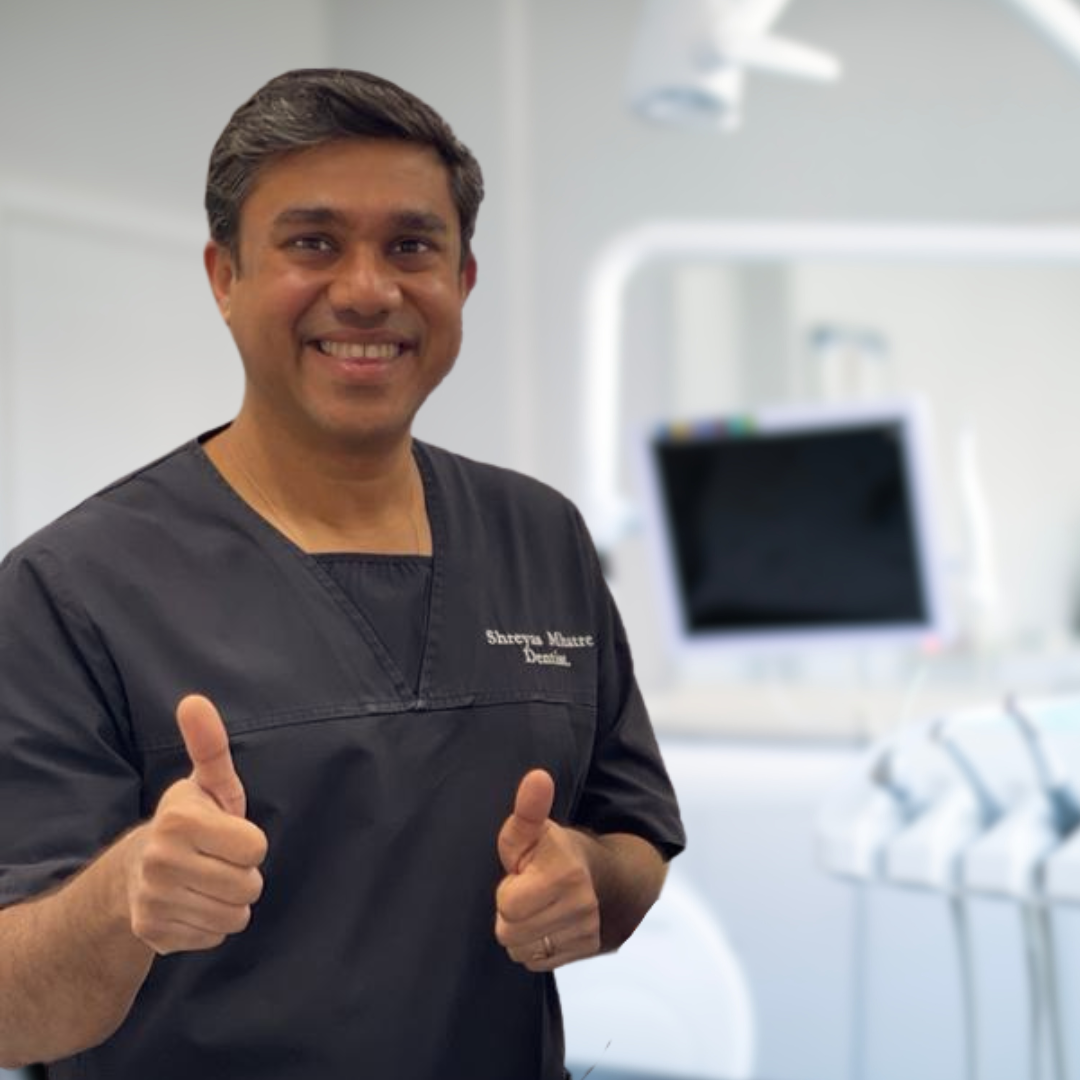
Dr Shreyas Mhatre is a UK-registered Dentist and Dental Implantologist at GM Dental And Implant Centre (GDC No. 136770). He has a particular interest in dental implants, full-mouth rehabilitation, Invisalign® and cosmetic dentistry. With a patient-focused approach, Dr Mhatre combines careful treatment planning with modern dental techniques to provide personalised care and help patients achieve healthy, functional and natural-looking results.
“I have just had my dental implants fitted the whole procedure went really smooth,...”

“I had my dead tooth broken so implant was the only option to make...”
“I’ve been struggling with my teeth for many years and I’ve lost hope that...”
“My daughter attended this practice in 2010 and finished her treatment in 2013. The...”
“I was treated here years ago as a teenager and so did a few...”
“My daughter had her orthodontic treatment here over a 3 year period. Dr Coonar...”


* Smilevalley Limited trading as GM Dental and Implant Centre is an Appointed Representative of Chrysalis Finance Limited, which is authorised and regulated by the Financial Conduct Authority. Smilevalley Limited is a credit broker, not a lender. The provider of a payment scheme which is not offered through or by Chrysalis Finance Limited may not be so authorised and regulated.
* G Mehta Ltd trading as GM Dental and Implant Centre Rochester is authorised and regulated by the Financial Conduct Authority. Finance is arranged through Chrysalis Finance Limited. The provider of a payment scheme which is not offered through or by Chrysalis Finance Limited may not be so authorised and regulated.
* GMValley Limited trading as GM Dental & Implant Ashford is an Appointed Representative of Chrysalis Finance Limited, which is authorised and regulated by the Financial Conduct Authority. GMValley Limited is a credit broker, not a lender. The provider of a payment scheme which is not offered through or by Chrysalis Finance Limited may not be so authorised and regulated.