5.0
4.7
4.9

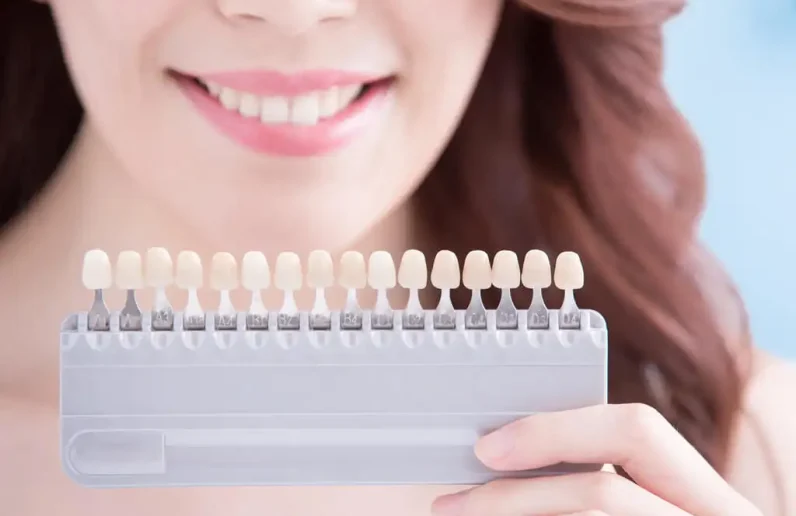
Temporary veneers and permanent porcelain veneers serve different purposes during cosmetic dental treatment. Temporary veneers are short-term coverings used while the final restorations are being prepared, whereas permanent porcelain veneers are custom-made ceramic shells designed to provide a longer-term improvement to the appearance of teeth.
Understanding the difference helps patients know what to expect after their teeth have been prepared, why temporary veneers may feel different and what changes when the final porcelain veneers are fitted.
Although both can improve the appearance of teeth, they differ in their materials, strength, fit, appearance and how they are attached to the natural tooth.
Temporary veneers, also called provisional veneers, are temporary coverings placed over prepared teeth while permanent porcelain veneers are being manufactured.
After a dentist prepares the teeth and takes impressions or digital scans, the information is sent to a dental laboratory. The laboratory uses these records to create porcelain veneers that match the planned shape, size and shade.
During the waiting period, temporary veneers may be fitted to:
Temporary veneers are generally made from materials such as acrylic or composite resin. They are attached using provisional cement or another temporary bonding method, allowing the dentist to remove them when the final restorations are ready.
They are not designed to withstand the same biting forces or provide the same long-term performance as permanent porcelain veneers.
Permanent porcelain veneers are individually manufactured ceramic coverings bonded to the front surfaces of teeth.
They are designed to improve concerns such as persistent discolouration, minor chips, uneven tooth shapes and small gaps, provided the teeth are suitable for this treatment.
Unlike temporary veneers, permanent porcelain veneers are manufactured with greater attention to the final fit, surface finish, translucency and colour.
Porcelain can reflect light in a way that resembles natural enamel, helping the restorations blend with surrounding teeth.
The final veneers are attached using a dental adhesive system and resin cement. This creates a stronger bond than the temporary attachment used during the provisional stage.
However, the word permanent does not mean they last forever. Porcelain veneers can eventually require repair or replacement because of wear, damage, changes in the supporting tooth or gum tissues, or problems with the bonding.
An important consideration is that preparing teeth for conventional porcelain veneers often involves removing a small amount of enamel. This is an irreversible procedure, so the decision requires careful planning.
| Feature | Temporary veneers | Permanent porcelain veneers |
|---|---|---|
| Main purpose | Short-term protection and appearance | Longer-term aesthetic restoration |
| Material | Usually acrylic or composite resin | Dental porcelain or ceramic |
| Manufacturing | Often made directly in the practice | Usually custom-made in a dental laboratory |
| Attachment | Temporary bonding material | Definitive adhesive bonding |
| Strength | More vulnerable to chipping and displacement | Generally stronger and more durable |
| Appearance | An approximation of the planned result | Carefully customised shape and shade |
| Stain resistance | More susceptible to staining | Generally highly stain-resistant |
| Lifespan | Short treatment period | Designed to last for years |
| Removal | Designed to be removed by the dentist | Removal or replacement may involve further tooth preparation |
Although the exact treatment plan varies, porcelain veneer treatment commonly involves several stages.
The dentist examines the teeth, gums and bite to determine whether veneers are appropriate. Existing decay, gum disease or other dental problems may need treatment first.
The discussion should also cover the desired tooth shape, colour and overall appearance.
If conventional porcelain veneers are suitable, the dentist may carefully remove a thin layer of enamel from the front of the teeth.
This creates room for the veneers and helps prevent them from looking excessively bulky. Impressions or digital scans are then taken so the dental laboratory can manufacture the final restorations.
Temporary veneers may be fitted over the prepared teeth while the laboratory makes the permanent restorations.
They provide a protective covering and help maintain the appearance of the smile during this period.
Once the porcelain veneers are ready, the dentist removes the temporary coverings and checks the final restorations.
Fit, colour, shape and the way the teeth meet when biting are assessed. Once any necessary adjustments have been made, the veneers are bonded to the teeth using a dental adhesive system.
A review appointment may be arranged to check comfort, gum health and the bite.
Temporary veneers are designed for short-term use, generally covering the interval between tooth preparation and the fitting of the final restorations.
Their lifespan depends on the material, bonding method, bite and how carefully they are maintained. They can loosen, chip or come away, particularly when exposed to excessive biting pressure.
Permanent porcelain veneers are designed to last considerably longer. Their longevity depends on several factors, including:
Porcelain is generally more resistant to surface staining than composite resin. However, the natural teeth surrounding veneers can still change colour over time.
Neither type of veneer should be regarded as indestructible.
Temporary veneers are more vulnerable to damage because their attachment is designed to be removable.
During this stage, it is sensible to:
If flossing around temporary veneers, follow the technique recommended by your dentist. Pulling floss upwards against a temporary restoration can sometimes dislodge it.
If a temporary veneer becomes loose or falls off, contact the dental practice rather than attempting to bond it back yourself. The underlying prepared tooth may need protection.
Not necessarily. Temporary veneers are commonly used when teeth have undergone preparation for laboratory-made porcelain veneers, but their use depends on the clinical circumstances.
For example, the dentist considers:
Some patients may also have temporary restorations made as part of a smile-design process, allowing them to assess an approximate proposed tooth shape before committing to the final restorations.
It is worth understanding that a temporary preview is not an exact guarantee of the final porcelain result. The final appearance depends on the laboratory fabrication, material selection, tooth preparation and bonding.
The cost of veneers depends on the material, number of teeth being treated, complexity of the case and laboratory work involved.
Fee guide for GM Dental And Implant Centre, the starting prices include:
These are treatment fees, not a personalised quotation. The fee guide does not list a separate price for temporary veneers.
Temporary restorations may form part of a wider porcelain veneer treatment plan. Patients should therefore ask whether their temporary veneers, laboratory work, fitting appointments and any additional procedures are included in the quoted treatment cost.
Porcelain veneers may be considered for patients who want to improve the appearance of teeth affected by:
However, veneers are not automatically the right choice for everyone.
A dentist will assess the amount of healthy enamel available, existing fillings, tooth condition, gum health and bite alignment.
Patients who regularly grind or clench their teeth may place additional stress on porcelain veneers, increasing the risk of damage. A protective night guard may be recommended where appropriate.
If the teeth are significantly misaligned, orthodontic treatment may be more appropriate. If the concern is limited to a small chip, composite bonding could provide a less invasive alternative.
The objective should be to achieve the desired improvement while preserving as much healthy natural tooth structure as possible.
Temporary veneers and permanent porcelain veneers have different roles in cosmetic dental treatment. Temporary restorations provide protection and maintain appearance during the preparation stage, while porcelain veneers are custom-made restorations intended to provide a longer-term aesthetic improvement.
For patients considering dental veneers in London, the decision should not be based on appearance alone. The condition of the natural teeth, available enamel, gum health, bite and long-term maintenance requirements all influence whether porcelain veneers are appropriate.
A clinical examination by a qualified dental professional is necessary before making a treatment decision. Any recommendation should consider the health of the teeth as well as the cosmetic result the patient hopes to achieve.
Reader information: This article is for educational purposes and does not replace a professional dental examination or personalised clinical advice. Treatment recommendations require an examination by a qualified dental professional.

Dr Shreyas Mhatre is a UK-registered Dentist and Dental Implantologist at GM Dental And Implant Centre (GDC No. 136770). He has a particular interest in dental implants, full-mouth rehabilitation, Invisalign® and cosmetic dentistry. With a patient-focused approach, Dr Mhatre combines careful treatment planning with modern dental techniques to provide personalised care and help patients achieve healthy, functional and natural-looking results.
“I have just had my dental implants fitted the whole procedure went really smooth,...”

“I had my dead tooth broken so implant was the only option to make...”
“I’ve been struggling with my teeth for many years and I’ve lost hope that...”
“My daughter attended this practice in 2010 and finished her treatment in 2013. The...”
“I was treated here years ago as a teenager and so did a few...”
“My daughter had her orthodontic treatment here over a 3 year period. Dr Coonar...”


* Smilevalley Limited trading as GM Dental and Implant Centre is an Appointed Representative of Chrysalis Finance Limited, which is authorised and regulated by the Financial Conduct Authority. Smilevalley Limited is a credit broker, not a lender. The provider of a payment scheme which is not offered through or by Chrysalis Finance Limited may not be so authorised and regulated.
* G Mehta Ltd trading as GM Dental and Implant Centre Rochester is authorised and regulated by the Financial Conduct Authority. Finance is arranged through Chrysalis Finance Limited. The provider of a payment scheme which is not offered through or by Chrysalis Finance Limited may not be so authorised and regulated.
* GMValley Limited trading as GM Dental & Implant Ashford is an Appointed Representative of Chrysalis Finance Limited, which is authorised and regulated by the Financial Conduct Authority. GMValley Limited is a credit broker, not a lender. The provider of a payment scheme which is not offered through or by Chrysalis Finance Limited may not be so authorised and regulated.