




 5.0
4.7
4.9

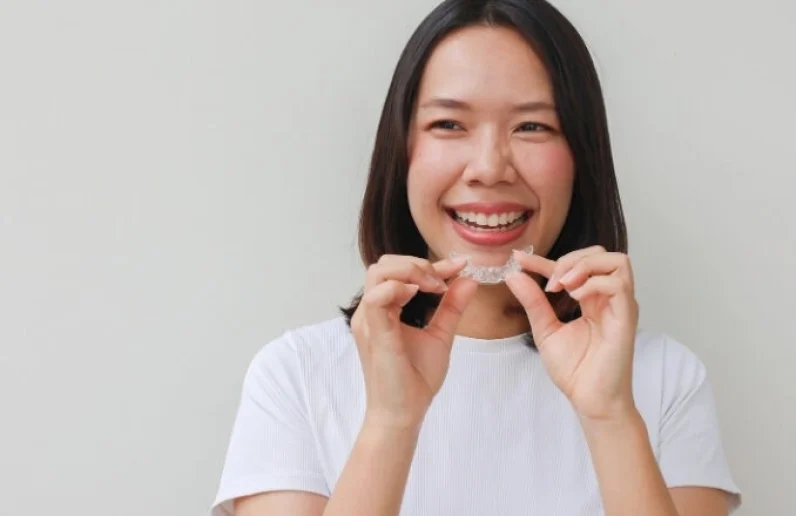
Most patients need to wear a retainer indefinitely to keep their teeth straight, though not necessarily full-time forever. Teeth naturally drift throughout life, so after Invisalign treatment in Ashford, dentists typically recommend nightly wear long-term, tapering down gradually once the bite has stabilised.
If you’ve just finished straightening your teeth with Invisalign in Ashford, there’s a good chance you’ve already asked your dentist this exact question: do you really need to wear that retainer forever? It’s one of the most common concerns we hear from patients nearing the end of their orthodontic journey, and understandably so. Nobody wants to feel tethered to a plastic tray for the rest of their life after investing time, money, and effort into a straighter smile.
The honest answer is a little more nuanced than a simple yes or no. Retention is a long-term commitment, but the intensity of that commitment changes significantly over time. Understanding why your teeth move, what your retainer options are, and how a sensible wear schedule works will help you protect your results without feeling like you’re signing up for a lifetime sentence.
Orthodontic relapse is the term dentists use when teeth gradually shift back towards their original position after braces or Invisalign treatment. It happens because of the natural elasticity of the periodontal ligaments and gum fibres that hold your teeth in place. Even after your teeth have been guided into perfect alignment, these fibres retain a kind of “memory” and can slowly pull teeth back over months and years if nothing holds them steady.
Relapse isn’t unique to Invisalign patients, nor is it a sign that your treatment failed. It’s simply biology. Bone and ligament tissue continues to remodel throughout adulthood, and factors such as ageing, jaw growth, wisdom teeth, and even the natural forces of chewing and talking can nudge teeth out of position over time. This is why dentists in Ashford and across the UK recommend retainers as standard practice following any course of Invisalign treatment, not as an optional extra.
The first few months after treatment are the highest-risk period for relapse, which is why retainer wear tends to be most intensive immediately after your aligners come off. Teeth are most mobile during this phase, and the surrounding bone hasn’t yet fully matured around their new positions.
There isn’t a single retainer option, and the right choice depends on your bite, your lifestyle, and your dentist’s clinical judgement following your Invisalign treatment in Ashford. Broadly speaking, retainers fall into two categories: removable and bonded.
Removable retainers are the most common choice after Invisalign. They’re taken out to eat, drink, and clean your teeth, which makes them simple to maintain. Two main types are used:
A bonded retainer is a thin wire fixed permanently to the back of your front teeth, usually the lower arch, the upper arch, or both. Because it’s not removable by the patient, it works continuously without relying on compliance. Bonded retainers are often recommended alongside a removable retainer, particularly for patients whose teeth were significantly rotated or crowded before treatment, as these cases carry a higher relapse risk.
Choose a removable retainer if you want flexibility and easy cleaning. Choose a bonded retainer if you want constant, low-maintenance protection without having to remember to wear something each night, particularly for the lower front teeth, which are especially prone to relapse.
Retainer wear typically follows a tapering schedule rather than a fixed, unchanging routine. Immediately after finishing Invisalign treatment, most dentists recommend wearing your retainer full-time, including during the day, for the first few months. This gives the bone and gum tissue time to stabilise around your newly aligned teeth.
After this initial period, wear is usually reduced to nights only. Many patients continue wearing a retainer every night for the first year post-treatment, since this is when relapse risk remains highest. From there, dentists often advise tapering down to a few nights a week on an ongoing basis.
The key point is that “ongoing” doesn’t mean every single night forever for most patients, but it does mean some form of long-term retention. Teeth can drift at any age, even decades after treatment, if retainers are abandoned entirely. Your dentist will tailor this schedule based on how stable your bite is, your age, and whether you have a bonded or removable retainer. A retainer check appointment roughly a year after finishing treatment is a sensible way to confirm your teeth have held their position and that your current wear routine is sufficient.
Stopping retainer wear too early, or skipping it altogether, is one of the most common reasons patients see their teeth shift back after Invisalign. Relapse can be surprisingly quick. Some patients notice subtle changes within just a few weeks of inconsistent wear, particularly in the lower front teeth, which are more prone to crowding and rotation.
In many cases, relapse starts small; a slight overlap of the lower incisors, a tiny gap reopening, teeth feeling less aligned than they used to. Left unaddressed, this can progress to a point where the original orthodontic problem returns in part or in full. Patients who’ve stopped wearing retainers for years sometimes find their teeth have shifted enough that they need a further short course of Invisalign to correct it, meaning additional time and expense that consistent retainer wear would have avoided.
If you’ve lost or stopped wearing your retainer and notice changes, don’t wait. Book a retainer check with your dentist as soon as possible. Catching movement early is far easier and cheaper to manage than correcting a full relapse.
Retainer costs vary depending on the type you choose and whether you need one arch or both. At our Ashford practice, standard retainers are priced per arch at £158. Vivera retainers, known for their durability and closer fit to the natural tooth surface, are priced at £315 for a single arch or £630 for both arches. Bonded retainers, which are fitted and maintained by your dentist rather than worn and removed daily, are priced at £315 per arch.
These costs typically represent a small fraction of what you’ve already invested in your Invisalign treatment in Ashford, and they’re a worthwhile safeguard against relapse. If you’re ever unsure which retainer type suits your bite and budget, your dentist can talk you through the options at your next check-up.
So, do you need to wear your Invisalign retainer forever? In the sense of wearing it every single night without fail for the rest of your life, usually not. But in the sense of maintaining some ongoing form of retention, whether that’s a few nights a week with a removable retainer or a permanently bonded wire, the answer is generally yes. Teeth don’t stop moving just because treatment has finished, and the investment you’ve made in a straighter smile deserves genuine, long-term protection.
The best approach is to follow your dentist’s personalised wear schedule closely, particularly during that critical first year, and to attend retainer check appointments so any early signs of movement can be caught and addressed. If you have questions about your own retention plan, or if it’s been a while since your retainer was last checked, your Ashford dentist can assess your bite and recommend the right path forward.
No, it is generally not recommended to stop wearing your retainer completely. Teeth can continue to shift naturally over time, even after they have settled into their new positions. Your dentist will advise you on a suitable long-term retainer routine to help maintain your results.
The recommended wear time depends on your individual treatment and your dentist’s advice. Some patients may need to wear their retainer full-time initially before switching to nightly wear. Follow your personalised retention plan to keep your teeth properly aligned.
At GM Dental and Implant Centre in Ashford, standard retainers cost £158 per arch. Vivera retainers cost £315 for one arch or £630 for both arches, while bonded retainers cost £315 per arch. Your dentist can help you choose the most suitable option for your needs and budget.
Vivera retainers are a popular option because they are clear, discreet, and designed for durability. However, the best retainer depends on your dental needs, bite stability, and budget. Your dentist can explain the differences between Vivera and other clear retainers before you decide.
You should attend retainer check-ups as recommended by your dentist to ensure your retainer fits correctly and your teeth remain stable. A check-up around one year after completing treatment can be useful, although the ideal frequency depends on your individual circumstances.
Neither option is universally better. Fixed retainers provide continuous support without requiring daily wear, while removable retainers are easier to clean and can be taken out when eating. Some patients benefit from using both types, depending on their relapse risk and dental needs.
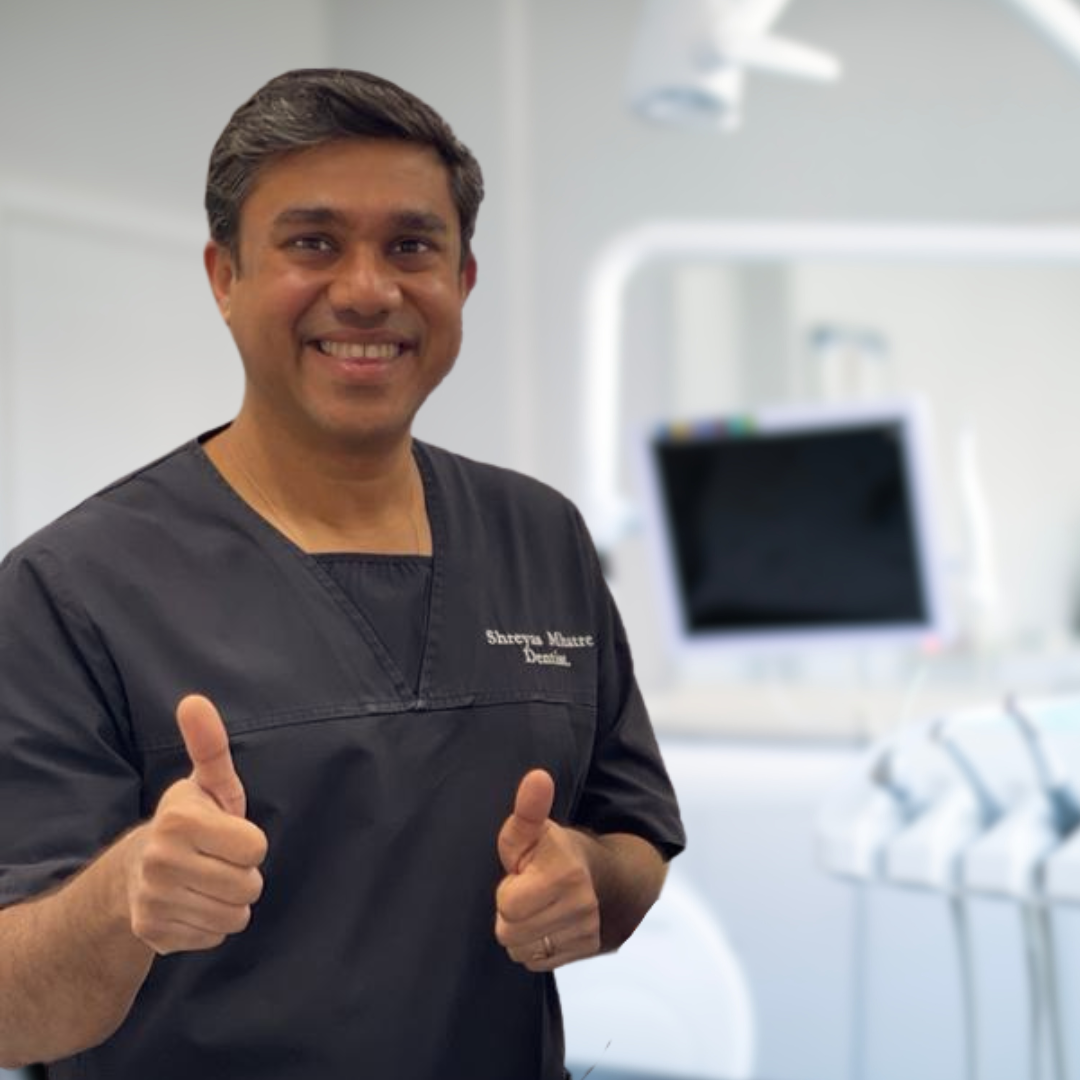
Dr Shreyas Mhatre is a UK-registered Dentist and Dental Implantologist at GM Dental And Implant Centre (GDC No. 136770). He has a particular interest in dental implants, full-mouth rehabilitation, Invisalign® and cosmetic dentistry. With a patient-focused approach, Dr Mhatre combines careful treatment planning with modern dental techniques to provide personalised care and help patients achieve healthy, functional and natural-looking results.
“I have just had my dental implants fitted the whole procedure went really smooth,...”

“I had my dead tooth broken so implant was the only option to make...”
“I’ve been struggling with my teeth for many years and I’ve lost hope that...”
“My daughter attended this practice in 2010 and finished her treatment in 2013. The...”
“I was treated here years ago as a teenager and so did a few...”
“My daughter had her orthodontic treatment here over a 3 year period. Dr Coonar...”


* Smilevalley Limited trading as GM Dental and Implant Centre is an Appointed Representative of Chrysalis Finance Limited, which is authorised and regulated by the Financial Conduct Authority. Smilevalley Limited is a credit broker, not a lender. The provider of a payment scheme which is not offered through or by Chrysalis Finance Limited may not be so authorised and regulated.
* G Mehta Ltd trading as GM Dental and Implant Centre Rochester is authorised and regulated by the Financial Conduct Authority. Finance is arranged through Chrysalis Finance Limited. The provider of a payment scheme which is not offered through or by Chrysalis Finance Limited may not be so authorised and regulated.
* GMValley Limited trading as GM Dental & Implant Ashford is an Appointed Representative of Chrysalis Finance Limited, which is authorised and regulated by the Financial Conduct Authority. GMValley Limited is a credit broker, not a lender. The provider of a payment scheme which is not offered through or by Chrysalis Finance Limited may not be so authorised and regulated.