




 5.0
4.7
4.9


Yes. You can have a dental implant checked by another dental practice, even if the original implant surgery and crown placement took place elsewhere. You do not have to return to the clinic that originally treated you to receive an assessment or ongoing implant maintenance.
In GM Dental And Implant Centre, patients can seek advice about dental implants placed at other practices. The purpose of an assessment is to establish whether the implant, surrounding gums and supporting bone appear healthy, and whether any further investigation or treatment is needed.
Perhaps you have moved to Kent, changed dental practices, lost contact with your original implant dentist or simply want reassurance that everything is functioning properly. Whatever the reason, an independent assessment can help you understand the condition of your implant and how best to look after it.
There are several reasons why patients seek an independent dental implant assessment:
Having an implant placed elsewhere does not automatically make it unsuitable for ongoing care at a different practice.
An implant review involves more than checking whether the replacement tooth looks secure. The dentist needs to assess the implant and the surrounding tissues.
Depending on your circumstances, the examination may include:
The visible replacement tooth is examined for damage, wear, movement and changes in appearance. The dentist will also assess whether the restoration is properly secured.
The gums are checked for redness, swelling, bleeding and recession. Gentle probing may be used to assess the tissues around the implant and record pocket depths.
The way your upper and lower teeth meet is examined. Excessive biting pressure or an uneven bite can contribute to mechanical complications, including loosening or damage to implant components.
Dental X-rays may be recommended to assess the bone surrounding the implant. If appropriate, a CBCT scan (three-dimensional dental imaging) may be considered when more detailed information is needed.
These findings help distinguish between a healthy implant, inflammation of the surrounding gums and more significant problems affecting the supporting bone.
Yes. A dentist can investigate many implant-related problems even without having performed the original surgery.
One condition they will look for is peri-implant disease, which affects the gums and bone surrounding a dental implant.
There are two important conditions to understand:
An implant can sometimes develop these conditions without causing obvious pain initially. This is one reason routine monitoring matters, even when everything appears normal.
A history of gum disease, smoking, inadequate cleaning and certain medical conditions can increase the risk of complications.
Not having your original treatment records should not prevent you from seeking an assessment.
However, having these documents can make the examination more informative:
The implant manufacturer can be particularly useful if a component needs replacing, as different implant systems may use different connections and components.
If you cannot obtain the records, the dentist can work with the information available and arrange appropriate imaging where necessary.
Previous X-rays are especially valuable because they allow the dentist to compare current bone levels with earlier images rather than relying on a single examination.
You should arrange a dental assessment if you notice:
A loose crown does not necessarily mean the implant itself has failed. Sometimes the problem involves a screw or another component of the restoration.
However, an implant that feels mobile needs prompt professional assessment. Do not attempt to tighten or repair it yourself.
Significant facial swelling, fever or spreading infection requires urgent dental assessment. If swelling affects breathing or swallowing, seek emergency medical attention.
Ideally, your implant should be monitored by a dentist with appropriate knowledge of implant maintenance and the management of complications.
If you have a history of gum disease or bone loss, input from a periodontist (a dentist specialising in gum health and supporting tissues) may also be appropriate.
When choosing a dental implant clinic in Kent, consider whether the practice can provide:
Patients looking for a dentist in Kent should also consider whether their ongoing care will include monitoring of their natural teeth and gums, rather than concentrating exclusively on the implant.
At GM Dental And Implant Centre, patients can discuss their existing implant concerns and the assessment and ongoing care that may be appropriate to their circumstances.
Dental implants need ongoing professional maintenance, just like natural teeth.
UK clinical guidance recommends at least annual implant reviews, although some patients need more frequent appointments. The appropriate interval depends on factors such as gum health, smoking, medical history, previous periodontal disease and how easily the restoration can be cleaned.
Daily brushing and cleaning between the teeth and around the implant are equally important. Your dentist or hygienist can recommend suitable interdental brushes or implant-specific cleaning aids.
Regular maintenance helps identify changes before they become more difficult to manage.
You do not need to return to the original clinic to have your dental implant checked. Another appropriately experienced dentist can assess the implant, examine the surrounding gums, review supporting bone levels and advise whether any treatment is necessary.
If you have moved to Kent, received treatment abroad or simply want reassurance about an existing implant, arranging an assessment is a sensible step.
The most important consideration is not where the implant was originally placed, but whether it is healthy, stable and receiving the maintenance it needs for the long term.
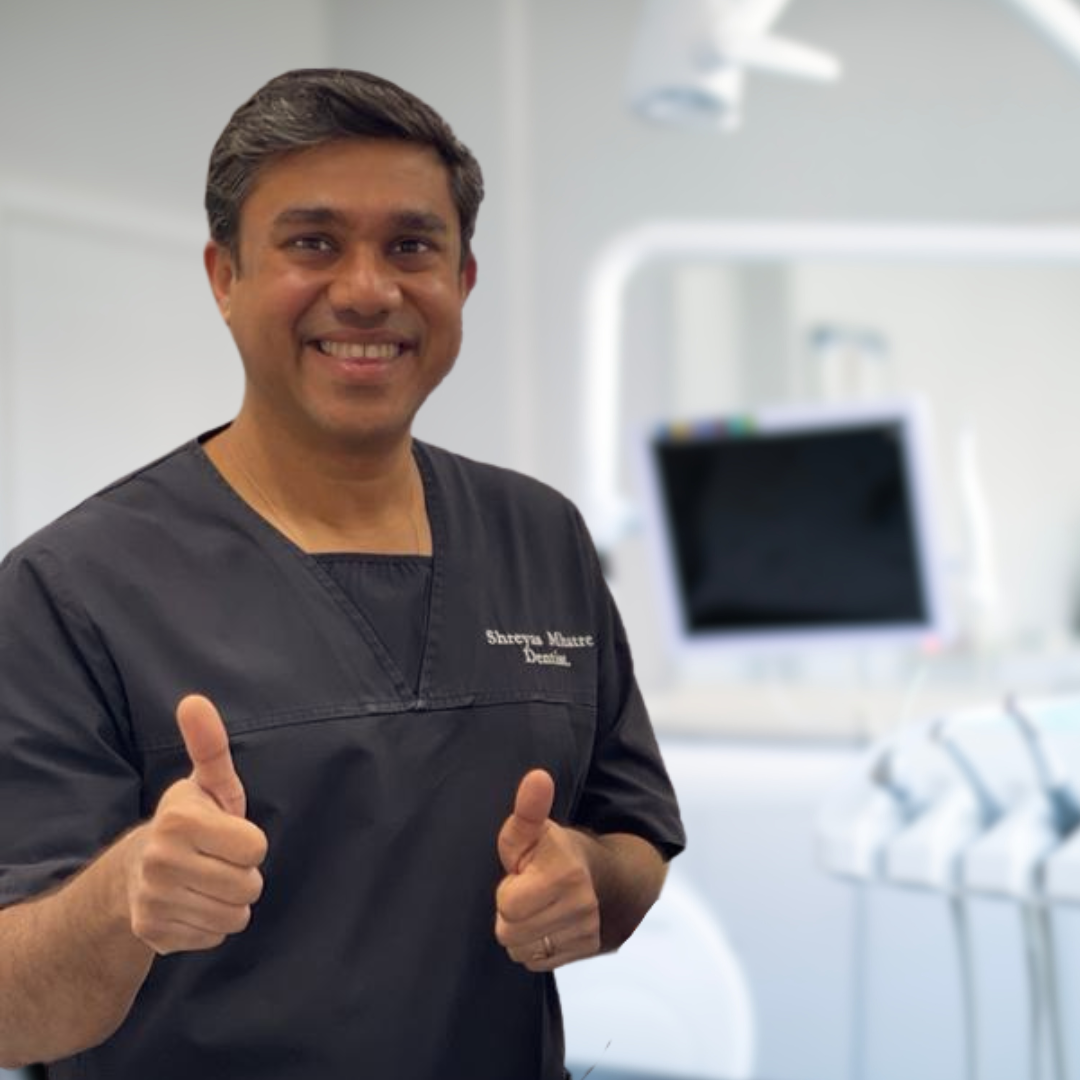
Dr Shreyas Mhatre is a UK-registered Dentist and Dental Implantologist at GM Dental And Implant Centre (GDC No. 136770). He has a particular interest in dental implants, full-mouth rehabilitation, Invisalign® and cosmetic dentistry. With a patient-focused approach, Dr Mhatre combines careful treatment planning with modern dental techniques to provide personalised care and help patients achieve healthy, functional and natural-looking results.
“I have just had my dental implants fitted the whole procedure went really smooth,...”

“I had my dead tooth broken so implant was the only option to make...”
“I’ve been struggling with my teeth for many years and I’ve lost hope that...”
“My daughter attended this practice in 2010 and finished her treatment in 2013. The...”
“I was treated here years ago as a teenager and so did a few...”
“My daughter had her orthodontic treatment here over a 3 year period. Dr Coonar...”


* Smilevalley Limited trading as GM Dental and Implant Centre is an Appointed Representative of Chrysalis Finance Limited, which is authorised and regulated by the Financial Conduct Authority. Smilevalley Limited is a credit broker, not a lender. The provider of a payment scheme which is not offered through or by Chrysalis Finance Limited may not be so authorised and regulated.
* G Mehta Ltd trading as GM Dental and Implant Centre Rochester is authorised and regulated by the Financial Conduct Authority. Finance is arranged through Chrysalis Finance Limited. The provider of a payment scheme which is not offered through or by Chrysalis Finance Limited may not be so authorised and regulated.
* GMValley Limited trading as GM Dental & Implant Ashford is an Appointed Representative of Chrysalis Finance Limited, which is authorised and regulated by the Financial Conduct Authority. GMValley Limited is a credit broker, not a lender. The provider of a payment scheme which is not offered through or by Chrysalis Finance Limited may not be so authorised and regulated.