




 5.0
4.7
4.9
5.0
4.7
4.9
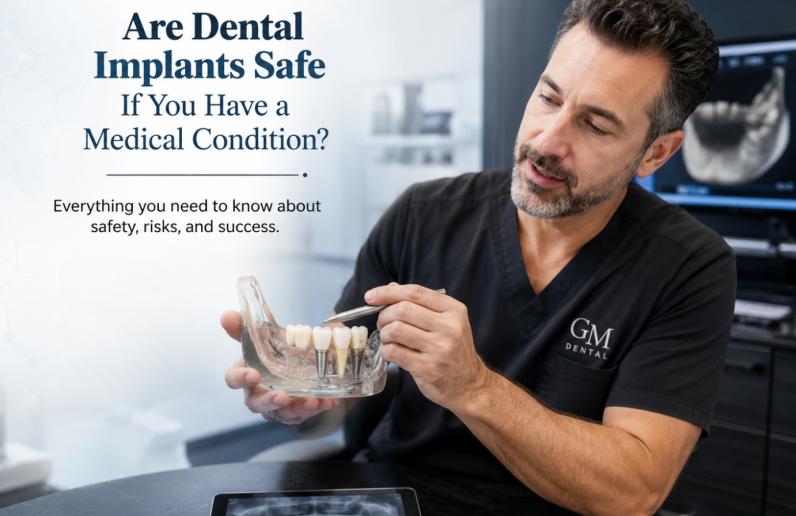
Dental implants are one of the very best tooth replacement options available today but are they for everyone? Knowing this first-hand is essential before you decide to proceed with treatment. The success of your dental implants can be influenced by certain medical conditions, and understanding that upfront could make all the difference.
Conditions like diabetes, osteoporosis, and heart disease are among those that can play a significant role in how your treatment progresses. Let’s explore everything you need to know about how medical conditions can impact dental implants.
When we talk about whether dental implants are safe for someone with a medical condition, there are two main things to consider:
For the overwhelming majority of patients with well-managed health conditions, dental implant treatment can be carried out safely. What changes is how we plan the treatment, the
precautions we take, and sometimes the timing of the procedure.
Your medical condition matters, but what matters even more is how well it is managed at the time of treatment.
If you have osteoporosis, your dentist will usually carry out detailed assessments, including 3D scans, to evaluate the condition and strength of your jawbone before treatment begins. In cases where bone loss has caused the jawbone to thin, additional procedures such as bone grafting may be recommended to help create enough support for the implant.
Many patients with osteoporosis can still be suitable candidates for dental implants, but regular dental check-ups and ongoing monitoring remain important.
Conclusion
Medical conditions such as diabetes, osteoporosis, and heart disease can influence dental implant treatment, but they do not have to stand in the way of it. With the right preparation, honest communication, and a team that understands your health as well as your smile, successful implant treatment is achievable for most patients.
At GM Dental, we assess every patient as an individual. We take your full medical history seriously and plan your treatment with care, giving you the best possible chance of a safe and successful dental implant procedure.
If you have been wondering whether dental implants are right for you, the best next step is a conversation. Book your free consultation with GM Dental today, and we will give you a clear, honest answer based on your individual needs.
Back to Blog“I have just had my dental implants fitted the whole procedure went really smooth,...”

“I had my dead tooth broken so implant was the only option to make...”
“I’ve been struggling with my teeth for many years and I’ve lost hope that...”
“My daughter attended this practice in 2010 and finished her treatment in 2013. The...”
“I was treated here years ago as a teenager and so did a few...”
“My daughter had her orthodontic treatment here over a 3 year period. Dr Coonar...”


* Smilevalley Limited trading as GM Dental and Implant Centre is an Appointed Representative of Chrysalis Finance Limited, which is authorised and regulated by the Financial Conduct Authority. Smilevalley Limited is a credit broker, not a lender. The provider of a payment scheme which is not offered through or by Chrysalis Finance Limited may not be so authorised and regulated.
* G Mehta Ltd trading as GM Dental and Implant Centre Rochester is authorised and regulated by the Financial Conduct Authority. Finance is arranged through Chrysalis Finance Limited. The provider of a payment scheme which is not offered through or by Chrysalis Finance Limited may not be so authorised and regulated.
* GMValley Limited trading as GM Dental & Implant Ashford is an Appointed Representative of Chrysalis Finance Limited, which is authorised and regulated by the Financial Conduct Authority. GMValley Limited is a credit broker, not a lender. The provider of a payment scheme which is not offered through or by Chrysalis Finance Limited may not be so authorised and regulated.